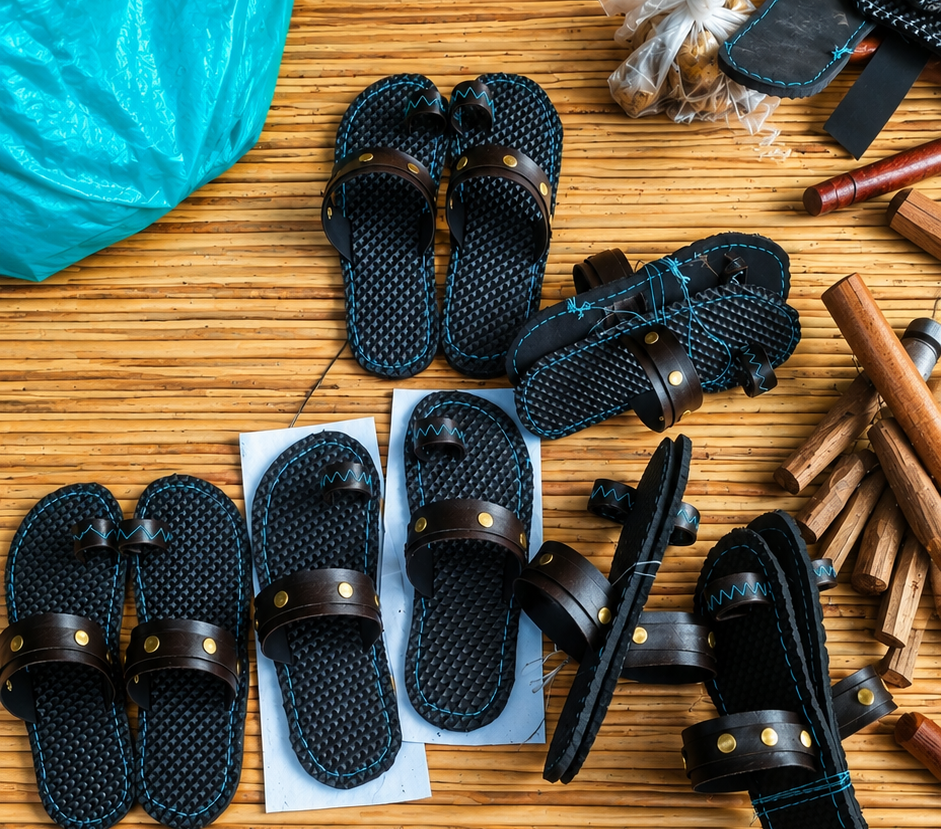
In Otwal Subcounty, Oyam District, a quiet transformation is taking place one stitch, one sole, and one pair of shoes at a time. Persons with disabilities from different community groups are undergoing practical training in craft shoe making, gaining skills that can open new pathways toward economic independence and sustainable livelihoods. What may look like a simple pair of handmade sandals is, in reality, a product of determination, creativity, and a growing belief in what is possible.
For many persons with disabilities, access to meaningful employment and income generating opportunities remains a significant challenge. Yet disability does not diminish a person’s ability to learn, create, contribute, or build a livelihood. The craft shoe-making training in Otwal is designed to turn that potential into practical opportunity. Participants are learning how to work with different materials, use basic tools, assemble shoe components, and produce finished footwear. Through hands-on practice, they are developing skills that can be applied beyond the training environment and potentially transformed into small businesses and sources of income. The training is therefore about more than learning to make shoes. It is about equipping people with the confidence and skills to create opportunities for themselves.
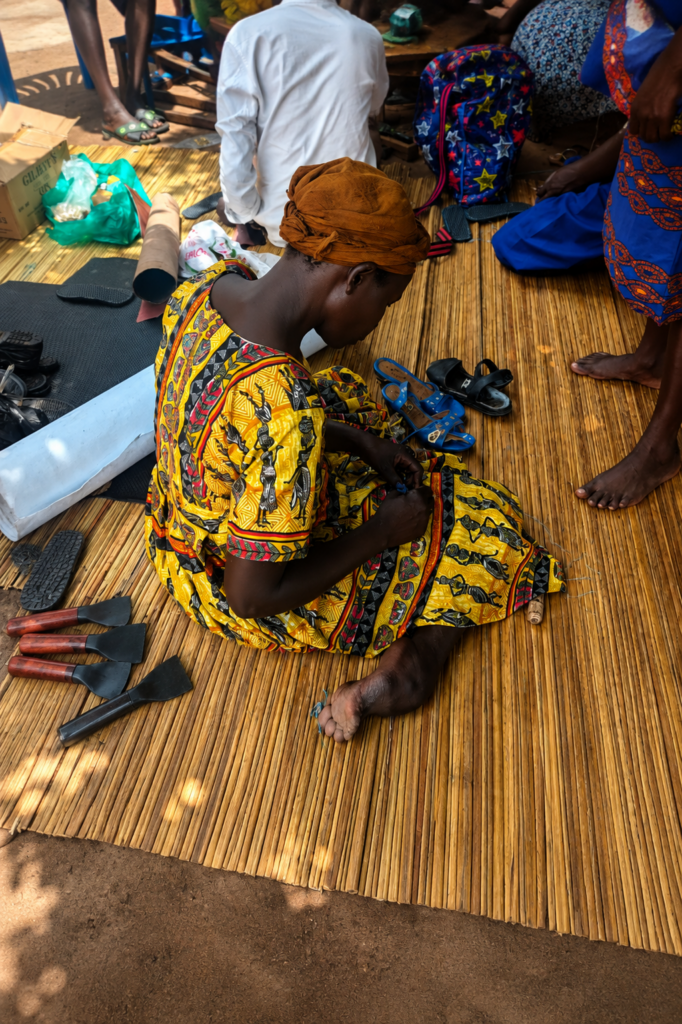
The training environment brings together participants from different groups, creating a space where people can learn from one another, share experiences, and strengthen their confidence. With tools and materials spread across woven mats, participants carefully work through each stage of production. Some focus on cutting and preparing materials, while others work on stitching, assembling, and finishing the sandals. Each completed pair tells a story. It speaks of patience. It speaks of practice. And most importantly, it speaks of ability. As participants continue to refine their techniques, the quality and appearance of their products demonstrate what can be achieved when people are given the right skills, support, and opportunity.
Skills development becomes truly meaningful when it creates possibilities beyond the classroom or training space. Craft shoe making has the potential to provide participants with an income-generating activity that can be developed at community level. With continued support, access to materials, improved tools, product development, and connections to markets, participants can potentially turn their skills into sustainable enterprises. This approach places persons with disabilities at the centre of their own economic empowerment. Rather than seeing them only as beneficiaries of support, the training recognizes them as skilled producers, entrepreneurs, and contributors to the local economy.
Economic inclusion is an important part of disability inclusion. When persons with disabilities have opportunities to acquire skills, earn an income, participate in markets, and contribute to their households and communities, the benefits extend far beyond financial independence. It strengthens confidence, builds dignity, creates a sense of purpose, and it challenges perceptions about what persons with disabilities can achieve. The participants in Otwal are demonstrating this through their work. Their handmade sandals are not simply crafts they are tangible evidence of what happens when opportunity meets determination.
The journey does not end when the training sessions are completed. The next step is to ensure that participants have the support needed to put their skills into practice and connect their products with potential customers and markets. With the right investment in skills, tools, mentorship, and market access, initiatives like this can help create a future where disability is not a barrier to economic participation. From Otwal Subcounty comes a powerful reminder, that when people are given the opportunity to learn, they can create. When they are supported to create, they can earn. And when they can earn, they can build more independent and dignified lives. The handcrafted shoes emerging from this training are small products with a much bigger message ability deserves opportunity.
The craft shoe-making initiative in Otwal is part of a broader effort to promote practical skills, inclusion, and sustainable livelihoods for persons with disabilities. Every skill learned is a step forward. Every pair completed is a demonstration of possibility. And every opportunity created brings us closer to communities where everyone has the chance to participate, contribute, and thrive. This is more than shoe making. This is empowerment in action.